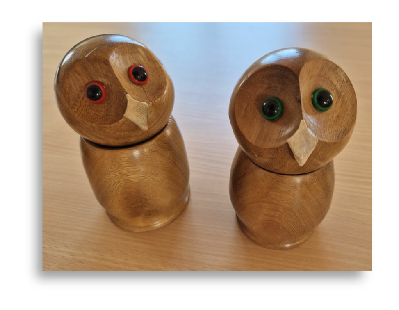
A pair of wooden owl ornaments invites comparison. Viewers naturally look for shared features and differences, so the relationship between the two objects becomes part of the design. Similar outlines can create a family resemblance while changes in proportion or grain give each piece a separate character.
A group is often more engaging when it contains a clear rhythm. A taller and a shorter object can suggest a visual conversation; two equal forms can feel more formal. Spacing influences the effect too. Close placement strengthens the sense of a pair, while a wider gap lets each object stand more independently.
In a sketchbook, draw the same two silhouettes with three different arrangements. Compare them without adding surface detail. This exercise shows how much a display can change even when the objects themselves remain the same.
The archive photograph is used here as an illustration of related ornaments. It is not presented as a new club event or commission. Study the relationship between the pieces, then consider how a similar principle might apply to a pair of bowls, lidded forms or small vessels in your own design collection.