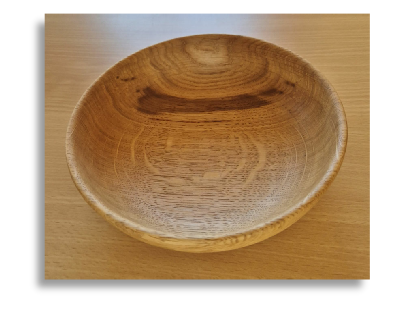
A wooden bowl begins with a simple outline, but small changes in that outline give it a very different character. A broad, low bowl feels open and relaxed. A deeper bowl with a tighter opening can feel more enclosed and sculptural. Looking at the silhouette before the decoration helps explain why two bowls made from similar timber can seem so different.
Try drawing several profiles on paper, keeping the same overall width while changing the height. Then compare how the curve travels from the foot to the rim. Does it rise steadily, flatten in the middle, or change direction abruptly? A continuous curve often gives the eye an easy route around the form, while an intentional change can create a strong accent.
The base deserves as much attention as the opening. A very broad foot may make a small bowl look heavy; a narrow foot can make a wide bowl appear more poised. Neither proportion is automatically right. What matters is whether the parts support the character you want the bowl to have.
The archive photograph provides an example to study rather than a pattern to copy. Sketch the outline, hide the surface detail, and decide which part of the profile attracts your eye first. This simple exercise makes a useful starting point for a discussion about form.