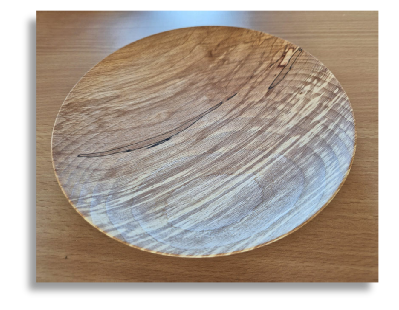
Grain can be the most expressive feature of a turned wooden dish. Lines, colour changes and irregular patterns give the surface a visual rhythm that would be difficult to reproduce with applied decoration. A restrained shape can make room for that natural detail to become the main subject.
Look at a piece in more than one orientation. A grain line that seems quiet from one side may become a strong diagonal from another. In a photograph, the position of the object and the direction of the light can change which features are visible. These differences make close observation valuable before choosing a display angle.
There is also a relationship between scale and detail. A small, busy pattern may suit a compact object, while a long sweep of grain can benefit from a wider uninterrupted surface. Adding beads, grooves or colour introduces another visual language. Consider whether those additions support the grain or compete with it.
For a sketchbook exercise, trace the main lines you see in the archive image, then draw a second version with fewer decorative features. Compare where your eye settles. The aim is to recognise how timber and shape work together, without assuming the species or history of a piece from its appearance alone.