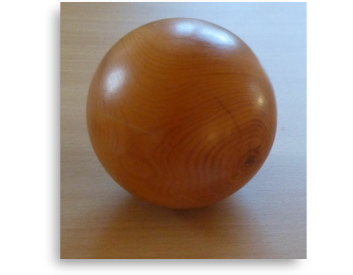
Rounded wooden ornaments make a useful study in visual simplicity. With fewer corners or projecting details, the eye follows the outline and the pattern of the timber. Small departures from a circular profile can create character without making the object look complicated.
Look for the widest point, the shape of the top and the way the lower section meets its support. These features give the viewer clues about weight and balance. A rounded form may appear settled and compact, or lighter and more lifted, depending on those relationships.
In a drawing, compare an almost circular outline with one that is slightly taller and one that is slightly wider. Keep the surface plain so the proportions remain the main variable. Afterwards, add a few grain lines and see whether your preferred version changes.
The archive image supplies a visual prompt, not a specification. Describe what you can see before deciding how the object might have been made. This habit encourages careful observation and makes group discussion more useful, because everyone begins with the same visible evidence rather than different assumptions about the hidden construction.